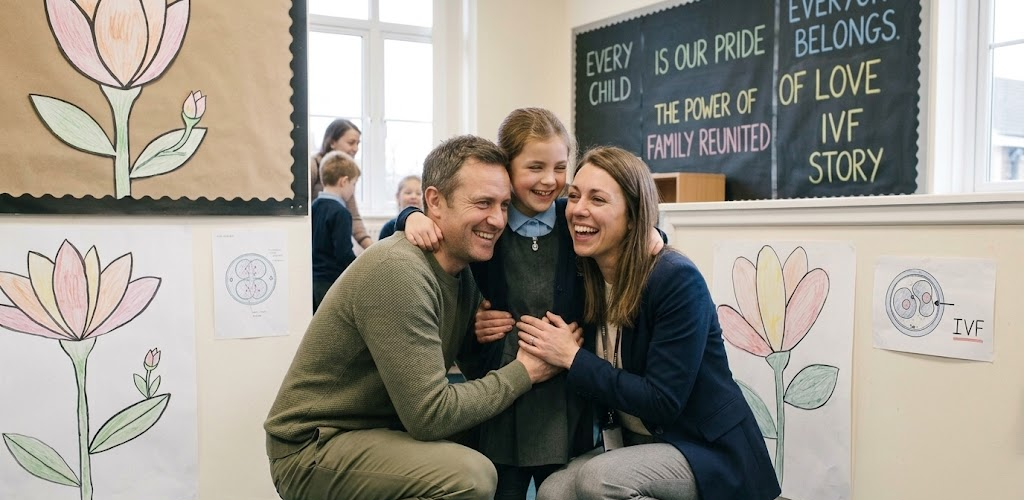

Think about the last time you dropped your children off at school or imagined a typical classroom in the UK. There’s a good chance that at least one child there was born through IVF. This is no longer unusual; assisted reproduction has become common for families across the country. It’s time to have a more open conversation about it.
Recent data from the Human Fertilisation and Embryology Authority (HFEA) shows that close to 21,000 children were born through IVF in the UK in 2023. This is about one in every 32 births. These numbers show how family life is changing today. However, our discussions about it still seem stuck in the past.
We need to change our views to align with these actual facts. This progress is not just a success; it shows how strong parents can be and how the idea of a British family is changing. Knowing these numbers helps us celebrate the different ways people bring new life into the world.
Here is what the IVF boom really reveals about the changing face of UK families and the hope it continues to provide.
At City Newcastle, we help people find trusted local businesses through our directory, making it easier for them to make informed decisions.
Why So Many People Are Still Surprised by This
Many people think that IVF is something only other families experience. This view often comes from how quietly couples go through the process. For many, IVF is a private journey shared with only a few people. Some don’t mention it at all.
As a result, people find out how common IVF is only after they start their own journey. Friends come forward, colleagues share their stories, and siblings reveal they’ve been on the same path. The information is always there; it just needs a way to be shared.
This article is that opening. It is not a warning sign or a guide to worst-case scenarios. It is a simple conversation about how IVF is already a part of family life in the UK, whether discussions happen or not.
IVF is usually talked about in terms of loss and challenges, and these experiences are important. However, they don’t tell the whole story. For many people, IVF is just a way to have a family. Families are what truly matter, and they don’t need extra explanations.
For a wider look at why fertility remains one of the least openly discussed health topics in the UK, explore this practical guide on the breakdown of stigma and knowledge gaps in reproductive health, which puts the silence into useful context.
The Scale of the Picture and What It Actually Means
If we look closely at the situation, we see a clear picture. According to the NHS, around one in seven couples in the UK face challenges conceiving. This is a significant number, including people of all ages, backgrounds, and locations.
What has changed in recent years is not the science, but the way people approach it. IVF is no longer seen as a last-resort option after many struggles to conceive. For more families, it is now a thoughtful decision among the different ways to become parents.
This change in how people view assisted conception is important. It affects when they start asking questions and seeking information. Starting these conversations early can lead to better results. This doesn’t guarantee success, but it gives people over time, more choices, and a better understanding of their options.
Fertility does not follow a single timeline. Some couples realise early that they may need help, while others come to this conclusion unexpectedly after months of trying. Both situations are valid. What is important is the need for clear and calm information and a supportive culture where it is easy to ask questions without feeling embarrassed.
When Awareness Becomes an Advantage
What has changed most in recent years is the openness of the conversation itself. Fertility awareness is increasingly being discussed earlier and more openly, rather than only when difficulties arise.
Specialists at Hull & East Riding Fertility (https://www.hulleastridingfertility.co.uk) note that greater awareness of reproductive health can help individuals and couples make more informed decisions about family planning.
It is important to understand the difference between knowing your options and needing them urgently. Many people learn about fertility in their twenties or early thirties out of curiosity, because a friend said something, or to better understand their own bodies. This awareness is a form of knowledge. More people currently see this awareness as a smart and proactive choice.
Talking about fertility is most helpful when it happens before it feels urgent. It’s useful to understand your options, not because something is wrong, but because this knowledge can be valuable in everyday life.
Think of understanding your fertility like knowing your finances or your blood pressure. You don’t have to be in a crisis to benefit from knowing your situation. Fertility works the same way. The more we talk about it, the more options people have, and it feels less overwhelming if they never need to act on that knowledge.
Conclusion
Imagine a classroom filled with children. Behind the numbers, there is a child starting school just like any other, with a familiar lunchbox and the same first-day nerves. While the science of their arrival is impressive, to their parents and friends, they are just a cherished part of the community.
In vitro fertilisation (IVF) has become a crucial way for modern British families to be formed. The story is no longer one of hardship but of strength and the everyday miracle of new life.
One in every 32 births now comes from assisted reproduction, showing how common it has become. As we discuss this openly, we replace old fears with understanding. This new reality shines a bright light on family life in the UK.
If you have questions about your own journey with fertility or available options, please reach out. We are here to help you understand and support you as you take the next step.